Bel (Bael) Tree: How to Plant and Care for It in Jaipur
Aegle marmelos (L.) Corrêa
Bel is a hardy native fruit tree that handles 48 °C heat, drought and salty soil. Learn when and how to plant it in Jaipur, how to care for it, its uses, and the cautions to know.
Bot User
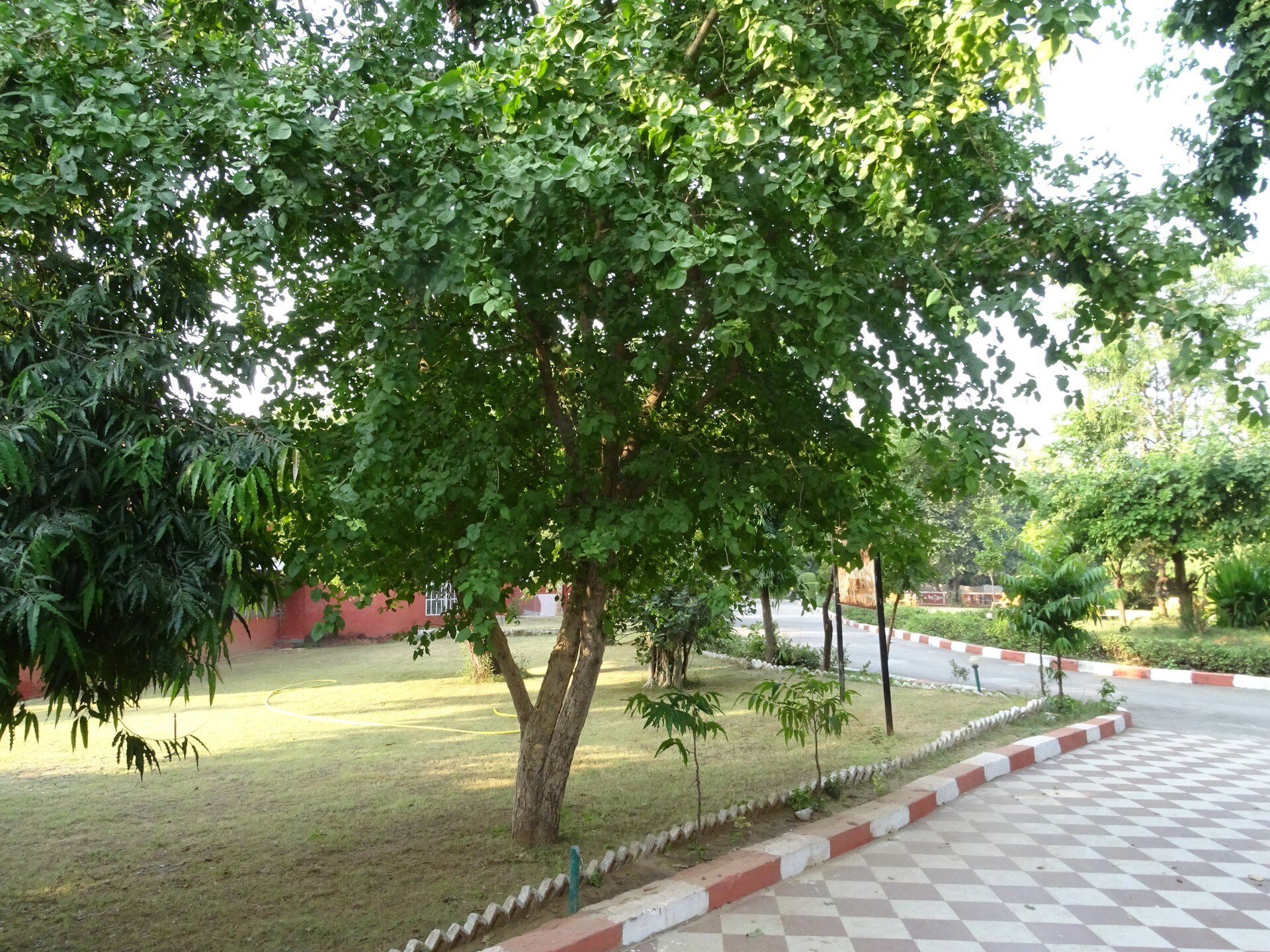
Bel (Aegle marmelos) is a native Indian tree whose three-part leaves are offered to Lord Shiva and whose fruit makes the classic summer sherbet. It is one of the hardiest fruit trees for hot, dry, salty and poor soils, which makes it a natural fit for Jaipur and much of Rajasthan. It is also listed as Near Threatened, so every tree planted helps keep a heritage species alive.
Photo: "Aegle marmelos" by Ajit Ampalakkad, CC0 1.0, via Wikimedia Commons
Quick facts
| Scientific name | Aegle marmelos (L.) Corrêa |
| Family | Rutaceae (citrus family) |
| Hindi name | बेल (Bel), बिल्व (Bilva), श्रीफल (Shriphal) |
| Height | Up to 12–15 m; improved varieties 3–6 m |
| Growth rate | Slow |
| Leaf habit | Deciduous: sheds its leaves in the dry summer |
| Water need | Low once established |
| Best planting months in Jaipur | July–August (monsoon); February–March only with assured irrigation |
| Jaipur suitability | Excellent |
| Conservation status | Near Threatened (IUCN) |
Why plant Bel in Jaipur
It handles extreme heat and low rain. Bel is reported to be unharmed from about −7 °C up to 48 °C, and it grows with 570–2,000 mm of rain a year, a range that includes Jaipur. In India it has a reputation for thriving where other fruit trees cannot survive.
It tolerates difficult soil. Bel grows in sandy, low-fertility soil as well as rocky, saline and sodic (alkaline) soils, with a pH of about 6 to 8.5.
It needs little water once established. Grown trees usually need no regular irrigation because they shed their leaves and rest through the hot season.
Its one weak point is waterlogging. Bel is very sensitive to standing water. Avoid low spots where rainwater collects.
Which variety?
- Goma Yashi (from ICAR-CIAH) is thornless under rainfed semi-arid conditions, and commercial planting of it has recently gained momentum in Rajasthan. This is our first choice for public sites.
- Thar Divya, Thar Neelkanth and Thar Srishti are also released for semi-arid areas.
- NB-5 is a compact variety (3–5 m) with sweet fruit of about 0.9–1 kg. NB-9 is medium height (4–6 m) and spreading.
How to plant Bel
When: The best time is July–August, so the slow-growing sapling has the whole monsoon to root before winter. Without irrigation, plant in June just after the first monsoon rain. February–March works only if you can water regularly.
What to plant: Choose a budded or grafted sapling. Grafted trees fruit in 3–4 years, while seedlings take 7–8 years. A thornless variety like Goma Yashi can only be guaranteed through grafting.
Steps:
- Dig a pit 1 m × 1 m × 1 m about two months before planting. In sodic soil, let the rain flush the open pit two or three times.
- Mix the top half of the dug soil with 3–4 baskets of well-rotted farmyard manure (FYM) and 1 kg neem cake or 500 g bone-meal. Fill the pit to 6–10 cm above ground level.
- In sodic soil, add 5–8 kg gypsum and 20 kg sand, and plant 20–25 days after filling.
- Plant at the same level as in the nursery bag, keeping the graft joint above the soil. Stake the young plant.
- Water immediately, then weekly until the plant is established.
Spacing: 8 m × 8 m is standard. Compact varieties can go closer: NB-5 at 6 m × 6 m, NB-9 at 8 m × 6 m.
Care in the first 3 years
Monsoon (July–September)
- Let the rain do the work, but drain any standing water from the basin.
- Weed and loosen the soil around the plant.
- Give the yearly feed in June–July. In year 1: 5 kg FYM plus 50 g nitrogen, 25 g phosphorus and 50 g potash per plant, increasing in the same proportion each year. In sodic soil, add 250 g zinc sulphate.
- Watch for bacterial canker: water-soaked leaf spots that turn into holes. Ask your local Krishi Vigyan Kendra (KVK) for approved control.
Post-monsoon (October–November)
- Water every 10–15 days.
- Spread organic mulch about 20 cm thick in the basin after the rains.
- Training: keep the bottom 75 cm of the trunk free of side branches and keep 4–6 well-spread main branches.
Winter (December–February)
- Water once a month.
- Cover young plants on frost nights. In arid Rajasthan, frost can damage leaves and tender twigs.
- Remove dead, crossing or diseased twigs. Otherwise bel needs little pruning.
Summer (March–June)
- Water young plants every 10–15 days and keep the mulch in place.
- Leaves will fall in the dry season. This is normal and does not mean the tree is dying.
- In May–June, check new leaves for leaf miner and leaf-eating caterpillars. Overall, bel is relatively free from pests and diseases.
Benefits
Food
The ripe pulp is eaten fresh or made into sherbet, jam, murabba and toffee. The fruit takes about 11 months to ripen and is harvested mainly in April–May.
Traditional medicine
Bel is traditionally used in Ayurveda. The unripe fruit has long been prized in traditional practice for diarrhoea and dysentery, and the fruit is also used as a laxative. These are traditional uses, not proven treatments. Please consult a doctor before using any plant medicinally.
Nature and soil
- Pollinators: honeybees, beetles, houseflies and butterflies visit the flowers, and honeybees are its main pollinators.
- Soil: bel grows on degraded, sodic and stony wasteland. Organic mulching in bel basins has improved soil organic matter and water infiltration, and restricted the rise of salts in salt-affected soil.
- Conservation: it is a native species listed as Near Threatened by IUCN.
Other uses
- Leaves and twigs are lopped for fodder.
- The hard, aromatic, grey-white wood is used for carving, turnery, tool handles and pestles, though it is not durable outdoors.
- The gum around the seeds is used as a household and jewellers' glue and in waterproofing lime plaster, and the unripe rind gives a yellow dye.
Because bel drops its leaves in the dry season, it gives little shade in peak summer. It is a fruit and heritage tree, not a shade tree.
Cultural significance
The three-part bel leaf, bilva patra, is an essential offering to Lord Shiva. Old Sanskrit literature says that offering a three-part bel leaf to Shiva washes away the sins of three births. Bel trees are commonly grown around temples, in parks and at homes.
Cautions and safety
- Thorns: many bel trees have stiff, straight spines, especially on young shoots. Prefer the thornless variety Goma Yashi where people walk.
- Heavy, hard fruit: fruits are 5–20 cm across with a woody shell, and some varieties weigh about 1 kg. Plant away from paths, seating and parking.
- Fruit drop: most young fruit naturally drops, mainly in August–September.
- No waterlogging: standing water can kill bel. Do not flood-water fruiting trees after a long dry spell, as this causes fruit cracking.
- Slow growth, bare in summer: expect a modest-looking tree for the first few years, and a leafless one in May–June.
- Toxicity (mild): the fruit is a widely eaten food, but the leaves are said in traditional records to cause abortion and sterility in women, and large medicinal doses of plant extracts can depress breathing and heart action. Pregnant women should not take leaf preparations as medicine. No pet-specific safety data was found.
Plant a Bel tree in someone's name with GreenEye: Gift a Tree
Planting calendar
- Northwest arid · Monsoon · Jul, Aug
- Northwest arid · Spring · Feb, Mar
Planting methods
GraftingPrimary method
Seed
Benefits
- Edible: The ripe pulp is eaten fresh or made into sherbet, jam, murabba and toffee.
- Medicinal: Traditionally used in Ayurveda; the unripe fruit is prized in traditional practice for diarrhoea and dysentery, and the fruit is used as a laxative. These are traditional uses, not proven treatments.
- Pollinators: Honeybees, beetles, houseflies and butterflies visit the flowers; honeybees are its main pollinators.
- Soil health: Grows on degraded, sodic and stony wasteland; organic mulching in bel basins has improved soil organic matter and infiltration and restricted the rise of salts in salt-affected soil.
- Biodiversity: A native species listed as Near Threatened by IUCN, so planting it supports conservation of the species.
- Fodder: Leaves and twigs are lopped for fodder.
- Timber: Hard, aromatic, grey-white wood used for carving, turnery, tool handles and pestles; not durable outdoors.
- Cultural: The three-part bel leaf (bilva patra) is an essential offering to Lord Shiva; bel trees are commonly grown around temples, parks and homes.
- Other: The gum around the seeds is used as household and jewellers' glue and in waterproofing lime plaster; the unripe rind gives a yellow dye.
Frequently asked questions
Will my Bel tree have thorns?
Some bel trees do. We prefer the thornless variety Goma Yashi where available.
When will it fruit?
A grafted tree usually starts fruiting 3–5 years after planting; the fruit takes about 11 months to ripen and is picked in spring and early summer.
Why does my tree look bare in summer?
Bel naturally sheds its leaves in the dry summer to save water. New leaves return with the season.
Why is Bel a good choice for Jaipur?
It tolerates heat up to about 48 °C, drought, and salty or alkaline soil, and needs little water once established.
Is Bel endangered?
It is listed as "Near Threatened" by IUCN, one step below threatened. Planting it helps.
Sources
- ICRAF Agroforestree Database 4.0: Aegle marmelos (Orwa et al. 2009)
- IGNOU eGyanKosh, Arid Fruits, Unit 3: Bael
- Singh et al. 2019, Research status of bael in India: A review, Indian Journal of Agricultural Sciences 89(10)
- ICAR: ICAR-CIAH Bikaner MoAs for semi-arid fruit varieties
- ICAR-CIAH Bikaner, research achievements
- National Medicinal Plants Board: Bael
- GBIF Species API: IUCN Red List category for Aegle marmelos
This article was prepared with AI assistance. Please verify important details with the sources listed.
Plant a tree you can track
Plant a tree on GreenEye land and track it as it grows.
Share this article