Amla (Indian Gooseberry): A Hardy Native Fruit Tree for Jaipur
Phyllanthus emblica L.
Amla is a tough native fruit tree that grows in dry, poor and even salty soils, needs little water once settled, and gives vitamin C-rich fruit every winter. Here is how to plant and care for it in Jaipur.
Bot User
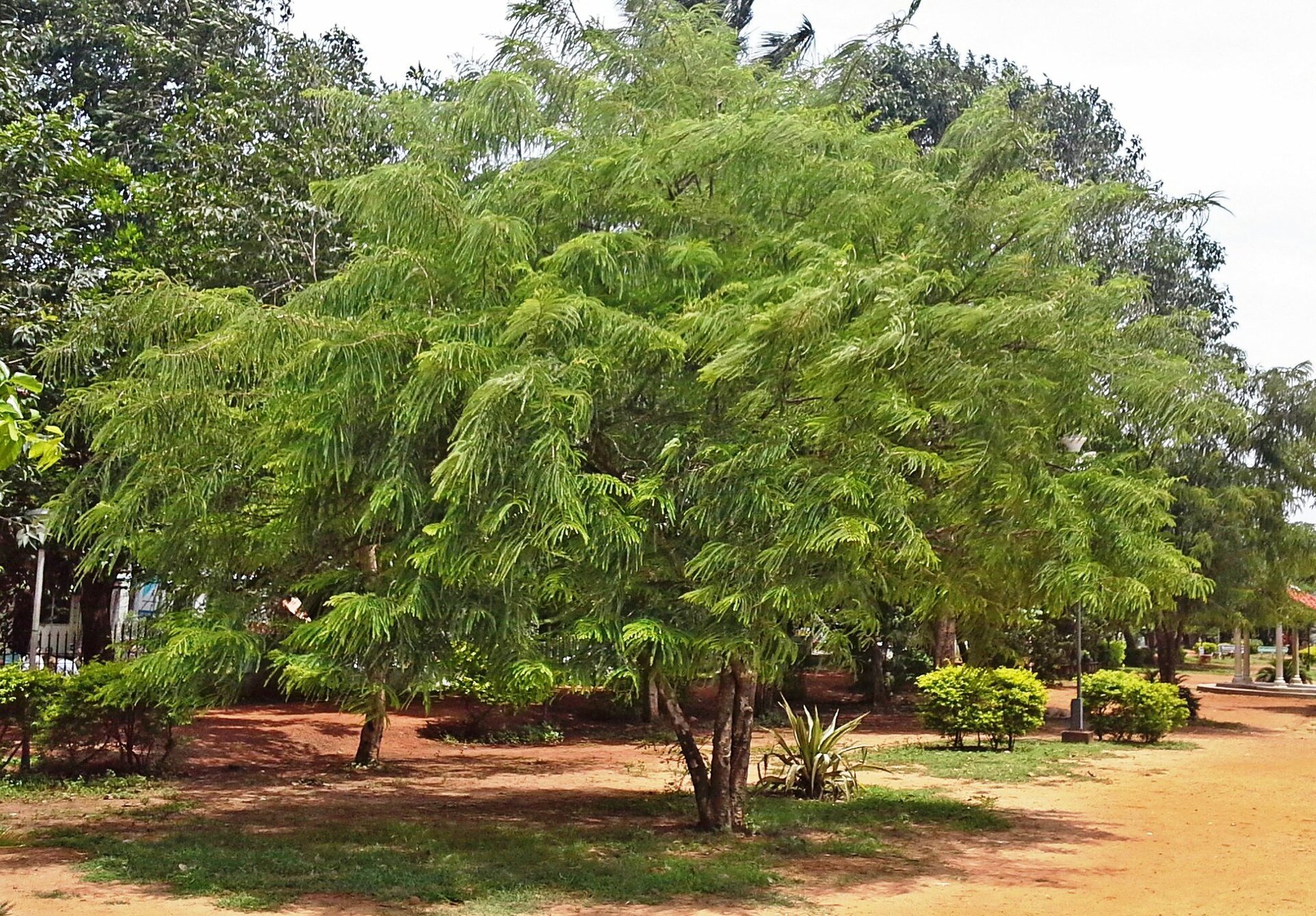
Amla, also called aonla or Indian gooseberry, is a graceful native tree with fine, feathery leaves and sour, vitamin-rich fruit. It is one of the toughest fruit trees for dry regions: it can thrive where the land is too dry and the soil too poor for most other fruit crops. That makes it a natural choice for Jaipur and the rest of Rajasthan.
Photo: "Amla tree (Phyllanthus emblica) at Vivekananda Park in Kakinada" by Adityamadhav83, CC BY 4.0 (https://creativecommons.org/licenses/by/4.0), via Wikimedia Commons
Quick facts
| Scientific name | Phyllanthus emblica L. (synonym Emblica officinalis Gaertn.) |
| Family | Phyllanthaceae (older books place it in Euphorbiaceae) |
| Hindi name | आँवला (Amla, Aonla); Sanskrit: आमलकी (Amalaki) |
| Height | Usually up to 18 m in the wild (rarely 30 m); orchard trees are kept to medium height |
| Fruiting life | Grafted trees may bear for 60–75 years |
| Growth rate | Not well documented |
| Water need | Low once established |
| Best planting months in Jaipur | July–August (monsoon); February as a second choice |
| Jaipur suitability | Excellent once established; young plants need protection from frost and extreme heat |
Why plant amla in Jaipur
It is built for dry land. Horticulture teaching material from IGNOU describes aonla as a hardy tree that needs little irrigation. An established orchard generally needs no water beyond normal rains.
Its fruit grows in the monsoon. The tree flowers from late March. After pollination, the tiny fruit stays dormant through the hot summer, starts growing again at the end of July, grows fastest in September, and is ready by November–December. So the fruit does most of its growing when rain is available.
It tolerates difficult soils. Amla grows on soils from slightly acidic to saline or sodic (pH 6.5–9.5). At high pH it can show nutrient deficiencies, so a little extra care at planting helps. It does not like heavy soil, waterlogging or a high water table.
It handles heat once it is grown. Mature trees can stand about 46 °C, but young plants must be shaded. Jaipur summers can be hotter than this, so give young plants shade for the first two years.
Frost is the main risk. Wilting of young aonla plants has been reported in Rajasthan, with bark cracking, leaf fall and wilt, linked to frost injury. Young plants should be watered and covered during the frost period. The tree often recovers well from cold injury.
Choose the right varieties
Popular cultivars include NA-7 (the leading cultivar nationally, an early and heavy, regular bearer), Krishna (NA-5), Kanchan (NA-4), NA-6 and NA-10, along with the older Chakaiya and Banarasi. ICAR-CIAH has also released Goma Aishwarya.
Plant two or three varieties together. Amla flowers need pollen from a different variety to set good fruit, so a single tree standing alone may give very little. Good combinations are NA-6 + NA-7 + NA-10, or Kanchan + Krishna.
How to plant amla
- Use a budded or grafted plant. Seedlings do not come true to type and take 6–8 years to fruit. A grafted tree can start fruiting from its 3rd year.
- Dig the pit early. Make a pit 1 m × 1 m × 1 m about two months before planting, for example in May for a July planting.
- Fill the pit well. Mix the top half of the soil with 25–40 kg of well-rotted farmyard manure (FYM) and 1 kg neem cake or 500 g bone-meal. Fill it to 6–10 cm above ground level. In sodic (alkaline) soil, add 5–8 kg gypsum and about 20 kg sand.
- Give it space. Keep 8–10 m between trees.
- Plant and water. Set the earth ball in the centre, press the soil firm, and water lightly straight after planting.
Care in the first 3 years
Monsoon (July–September)
Rain usually does the watering; water only in long dry breaks. Weed the basin and make sure water drains away, because amla dislikes waterlogging. Give the second half of the nitrogen dose in July or August. Watch for the bark-eating caterpillar, which tunnels into the stem. For any spray, ask your local Krishi Vigyan Kendra (KVK) which products are currently approved.
After the monsoon (October–November)
Water every 10–15 days. Spread a mulch of straw, dry leaves or crop residue around the base; it builds soil organic matter and helps earthworms. Cut off shoots with galls (swellings) made by the shoot gall maker insect.
Winter (December–February)
Water lightly before frost nights and cover young plants during frost. In January–February, before flowering, give the full dose of FYM, half the nitrogen and all the phosphorus and potash. A guide per tree:
| Year | N | P | K | FYM |
|---|---|---|---|---|
| 1 | 100 g | 50 g | 100 g | — |
| 2 | 200 g | 100 g | 200 g | 5 kg |
| 3 | 300 g | 150 g | 300 g | 10 kg |
This is also the time for training: let branches start at 0.75–1 m above ground, keep 2–4 strong, wide-angled main branches (later 4–6), and remove any suckers coming from the rootstock.
Summer (March–June)
Water every 10–15 days in April–June, by basin, drip or a buried clay pot (matka). Drip saves 40–50% of water, and pitcher irrigation has worked well where water is short. Keep a thick mulch and shade young plants. Aphids may appear. Fruit with brown, dead tissue inside (internal fruit necrosis) is a boron problem, corrected with borax.
After the first 2–3 summers, the tree mostly survives on rain, with an optional light watering after fertilising or in long dry spells.
Benefits
Food
The sour, astringent fruit is eaten raw or made into murabba, pickle, candy and juice. It is very high in vitamin C; one variety, BSR-1, has been reported at 620 mg per 100 g. Amla was even issued to Indian troops in World War II as a vitamin C ration.
Traditional medicine
Amla is traditionally used in Ayurveda for digestion, coughs and general vitality, and is a main ingredient of Triphala and Chyavanprash. These are traditional uses, not proven cures.
Bees, soil and farm uses
- Pollinators: honeybees visit the flowers in the morning and late evening; wind also helps pollination.
- Soil: branches are lopped for green manure and are said to help correct very alkaline soils. Mulching the basin raises soil organic matter.
- Fodder: the leaves are used as cattle fodder.
- Wood: the hard red wood is used for small construction and tools. It lasts well under water and has traditionally been used in wells.
- Other uses: the bark, fruit and leaves are rich in tannin and give dyes and ink. Dried fruit is used in hair care.
- Beauty: with its fine, feathery foliage, amla is a graceful ornamental tree.
Cultural significance
The amla tree is regarded as sacred by many Hindus. Its fruit is central to Ayurveda, especially in Triphala and Chyavanprash, and the tree has a respected place in Indian homes.
Cautions and safety
- Safe to eat: the fruit is a widely eaten food, and no toxicity is documented in the sources we consulted. We found no data on safety for pets, though the leaves are fed to cattle.
- Needs a partner variety: a single isolated amla may set little fruit.
- Frost: frost-wilt of young plants has been reported in Rajasthan, so protect them in winter.
- Brittle branches: they can break under heavy fruit. Build a strong framework early.
- Pests: the bark-eating caterpillar is the main pest.
- Wrong site: waterlogged and heavy soils are unsuitable.
Plant an amla tree
Plant an amla tree in someone's name with GreenEye: Gift a Tree
Planting calendar
- Northwest arid · Monsoon · Jul, Aug
- Northwest arid · Spring · Feb
Planting methods
GraftingPrimary method
Seed
Benefits
- Edible: The sour fruit is eaten raw or made into murabba, pickle, candy and juice. It is very high in vitamin C (one variety, BSR-1, reported at 620 mg/100 g).
- Medicinal: Traditionally used in Ayurveda for digestion, coughs and general vitality; a main ingredient of Triphala and Chyavanprash. These are traditional uses, not proven cures.
- Pollinators: Honeybees work the flowers in the morning and late evening; wind also helps pollination.
- Soil health: Lopped branches are used as green manure and are said to help correct very alkaline soils; mulching the basin raises soil organic matter.
- Fodder: The foliage is used as cattle fodder.
- Timber: Hard red wood used for minor construction and implements; durable under water and traditionally used in wells.
- Other: Bark, fruit and leaves are rich in tannin and yield dyes and ink; the dried fruit is used in hair care.
- Ornamental: A graceful ornamental tree with fine, feathery-looking foliage.
Frequently asked questions
When will my amla tree fruit?
A grafted tree can start fruiting from its 3rd year, with full crops after about 10 years.
Is amla suited to Jaipur?
Yes. It is one of the best fruit trees for dry regions and tolerates poor and even salty soils. Young plants need frost and heat protection.
Why are two varieties planted together?
Amla flowers need pollen from a different variety to set good fruit, so we plant mixed varieties.
How much water does it need?
Regular watering in the first 2–3 summers; after that it mostly survives on rain.
When is the fruit ready?
Around November–December in North India.
Sources
- Orwa C. et al. 2009. Agroforestree Database 4.0: Emblica officinalis (ICRAF)
- IGNOU eGyanKosh, Arid Fruits, Unit 2: Aonla (Emblica officinalis Gaertn)
- ICAR-CIAH Bikaner, research achievements: released varieties
- GBIF Species API: IUCN Red List category for Phyllanthus emblica
This article was prepared with AI assistance. Please verify important details with the sources listed.
Plant a tree you can track
Plant a tree on GreenEye land and track it as it grows.
Share this article