How do trees store carbon, and why is there no fixed number per tree?
Trees pull CO2 from the air and lock carbon into wood, roots and soil. Here is how that works, how India measures forest carbon, why per-tree figures vary so widely, and why permanence matters.
Frequently asked questions
Ek ped kitna CO2 absorb karta hai (how much CO2 does one tree absorb)?
There is no single correct number. A tree's yearly uptake depends on its species, age, size, soil, rainfall, care and whether it survives. A young sapling stores very little, a fast-growing mid-age tree much more, and a figure measured for one species in one place cannot be applied to every tree.
Carbon sequestration kya hai (what is carbon sequestration)?
Carbon sequestration means taking CO2 out of the air and storing the carbon somewhere for a long time. Trees do it by growing: they turn CO2 into wood, roots and leaves, and some of that carbon moves into the soil.
Which tree absorbs the most CO2?
No species wins everywhere. Fast-growing trees take up carbon quickly when young, while dense, long-lived hardwoods can hold more carbon over many decades. The best tree for carbon is usually a native species suited to the local soil and rainfall that will survive and grow for a long time.
Do trees store carbon forever?
No. Carbon stays stored only while the tree, its wood and the soil carbon remain. Fire, pests, drought, storms, cutting or decay can release it again. The IPCC (AR6, 2022) notes that carbon stored in vegetation and soils can be reversed by human or natural disturbances and climate change.
Can planting trees offset my carbon footprint?
Not reliably on its own. Saplings store little carbon in their first years, some do not survive, and the carbon can be lost later. Planting native trees has many benefits, but it works best alongside cutting your own emissions, not as a replacement for it.
How much carbon do India's forests store?
The India State of Forest Report 2023 (Forest Survey of India, released December 2024) estimates 7,285.5 million tonnes of carbon in India's forests, 81.5 million tonnes more than the 2021 assessment. Soil organic carbon is the largest pool.
Do young trees or old trees absorb more carbon?
Both matter in different ways. Young trees grow fast in the middle years, so their yearly uptake can be high, while old trees and old forests hold large stocks that would be released if cut. The IPCC notes that carbon uptake slows as forests mature, so protecting existing forests is as important as planting new ones.
Sources: 2006 IPCC Guidelines for National Greenhouse Gas Inventories, Volume 4 (AFOLU), Chapter 4 Forest Land; 2006 IPCC Guidelines, Volume 4, Chapter 2 Generic methodologies (carbon pools, gain-loss and stock-difference methods); 2019 Refinement to the 2006 IPCC Guidelines, Volume 4, Chapter 4 Forest Land; PIB, Union Minister Bhupender Yadav releases India State of Forest Report 2023 (December 2024); PIB backgrounder, India's Green Recovery: Forest and Tree Cover Grows (27 December 2024); Forest Survey of India, India State of Forest Report 2023, Volume I; PIB, Carbon stock in India increases by 79.4 million tonnes (ISFR 2021); IPCC AR6 Working Group III, Summary for Policymakers (2022); IPCC AR6 Working Group III, Chapter 12 Cross-sectoral perspectives (2022); India's Intended Nationally Determined Contribution (2015), UNFCCC NDC Registry; GHG Protocol, Corporate Accounting and Reporting Standard (Revised Edition); Verra, VCS AFOLU Non-Permanence Risk Tool; UNFCCC: India's Updated First Nationally Determined Contribution under Paris Agreement (2021-2030), August 2022; UNFCCC: India's Nationally Determined Contribution (2031-2035), April 2026
This article was prepared with AI assistance and checked by the GreenEye team against the sources shown in each section.
Related articles

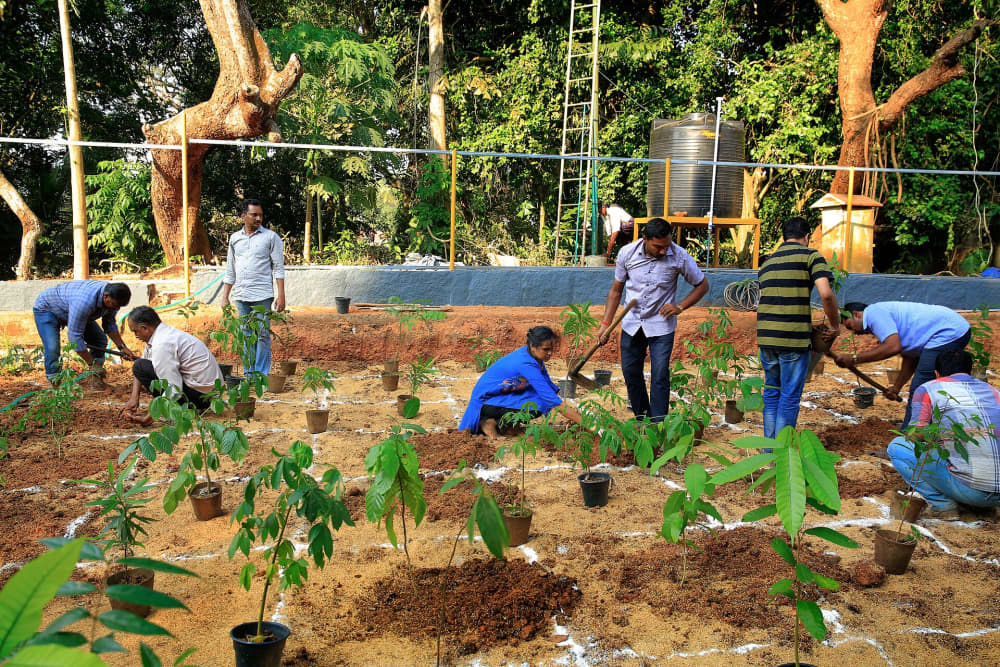
Green Credit Programme India: Rules, Tree Plantation and How It Differs from Carbon Credits
What India's Green Credit Programme is, who runs it, how the tree plantation rules changed from February 2024 to…
Carbon credits explained: what is one carbon credit?
What one carbon credit means, compliance vs voluntary markets, avoidance vs removal, additionality, permanence,…
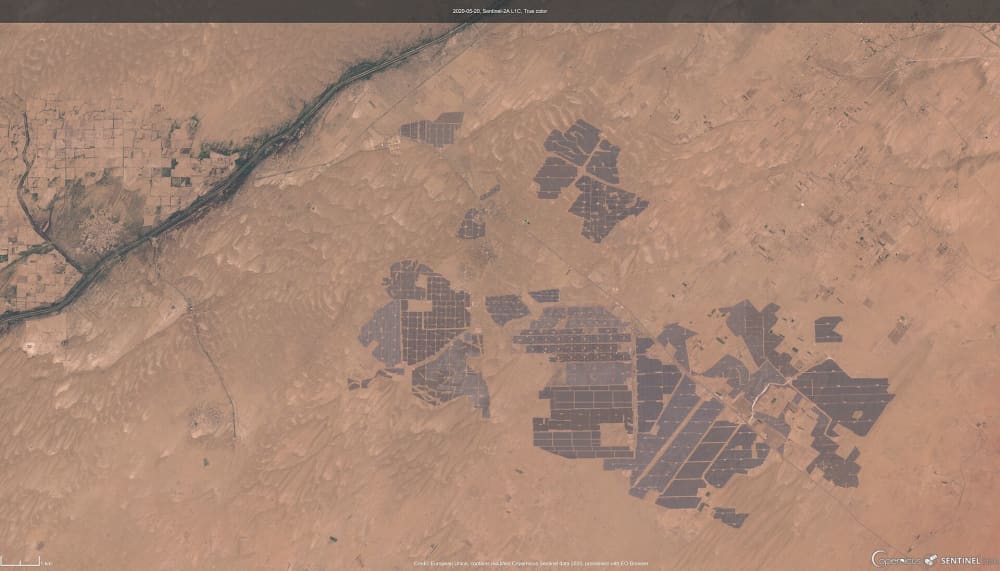
India's Climate Targets: NDC, Panchamrit and Net Zero by 2070
India's climate targets explained: the 2015 and 2022 NDCs, the new NDC for 2031-2035 with a 47% intensity cut and 60%…
Carbon neutral vs net zero: what the claims mean and how to spot greenwashing
A neutral guide to carbon neutral, net zero and climate positive claims, the standards behind them (ISO 14068, SBTi,…

What is a carbon footprint?
A plain guide to what a carbon footprint is, what it includes, how big the average Indian footprint is, and what the…
Want to understand this for your home or company?
Talk to us. We are happy to explain what this means for you in plain words. We do not sell carbon credits and we cannot promise any result, but we can help you think it through.
Talk to usShare this article