What are greenhouse gases and CO2 equivalent (CO2e)?
Which gases warm the planet, how CO2 equivalent and global warming potential work, why reports use different GWP values, and where India's emissions come from.
Frequently asked questions
What is CO2e in simple words?
CO2e, or carbon dioxide equivalent, is one common unit that shows how much warming a mix of greenhouse gases causes, expressed as the amount of carbon dioxide that would cause similar warming. For example, 1 tonne of non-fossil methane is about 27 tonnes CO2e using the IPCC AR6 100-year value.
What is the difference between CO2 and CO2e?
CO2 is one gas, carbon dioxide, while CO2e is a unit that adds all greenhouse gases together after converting them to the warming effect of carbon dioxide. A footprint given in CO2 alone leaves out methane, nitrous oxide and fluorinated gases.
Which greenhouse gas causes the most global warming?
Carbon dioxide causes the most human-made warming overall, because it is released in by far the largest amounts and part of it stays in the air for centuries. In India it made up 78.9% of greenhouse gas emissions in 2022 (BTR-1, MoEFCC).
Is methane worse than carbon dioxide?
Kilogram for kilogram, methane traps much more heat: about 27 to 30 times more over 100 years and about 80 times more over 20 years, according to IPCC AR6. But it stays in the air for only about 12 years, and far less of it is released, so carbon dioxide still causes more total warming.
What is the GWP of methane as per the IPCC?
In the IPCC Sixth Assessment Report (AR6, 2021), the 100-year GWP of methane is 27.0 for non-fossil sources and 29.8 for fossil sources. The older AR5 value of 28 is still used for national reports under the Paris Agreement, and India's BUR-4 used the AR2 value of 21.
Is water vapour a greenhouse gas?
Yes, water vapour is a greenhouse gas and the largest natural part of the greenhouse effect, but it acts as a feedback rather than a driver. Its amount rises as the air warms because of other gases, so it is not counted in emission inventories.
Does an air conditioner release greenhouse gases?
Yes, in two ways: the electricity it uses is mostly made from coal in India, and its refrigerant, often an HFC, is a strong greenhouse gas if it leaks. For example, 1 kg of HFC-32 equals 771 kg CO2e using the IPCC AR6 100-year value.
What is the difference between carbon and carbon dioxide in reports?
Carbon (C) counts only the carbon atoms, while carbon dioxide (CO2) counts the whole molecule, so 1 tonne of carbon equals about 3.67 tonnes of CO2. Forest and soil studies often report carbon, so convert before comparing with emissions.
Sources: IPCC AR6 Working Group I, Summary for Policymakers (2021); IPCC AR6 Working Group I, Chapter 7: The Earth's Energy Budget, Climate Feedbacks and Climate Sensitivity (2021); IPCC AR6 Working Group III, Annex I: Glossary (2022); GHG Protocol, IPCC Global Warming Potential Values, Version 2.0 (August 2024); MoEFCC, India First Biennial Transparency Report (BTR-1) to the UNFCCC; MoEFCC, India Fourth Biennial Update Report (BUR-4), December 2024; UNFCCC Decision 18/CMA.1, Modalities, procedures and guidelines for the transparency framework; UNFCCC Decision 5/CMA.3, Guidance for operationalizing the modalities, procedures and guidelines for the enhanced transparency framework; Press Information Bureau / PM India: Cabinet approves ratification of Kigali Amendment to the Montreal Protocol (August 2021); 2006 IPCC Guidelines for National Greenhouse Gas Inventories, Volume 2, Chapter 1
This article was prepared with AI assistance and checked by the GreenEye team against the sources shown in each section.
Related articles


What is a carbon footprint?
A plain guide to what a carbon footprint is, what it includes, how big the average Indian footprint is, and what the…
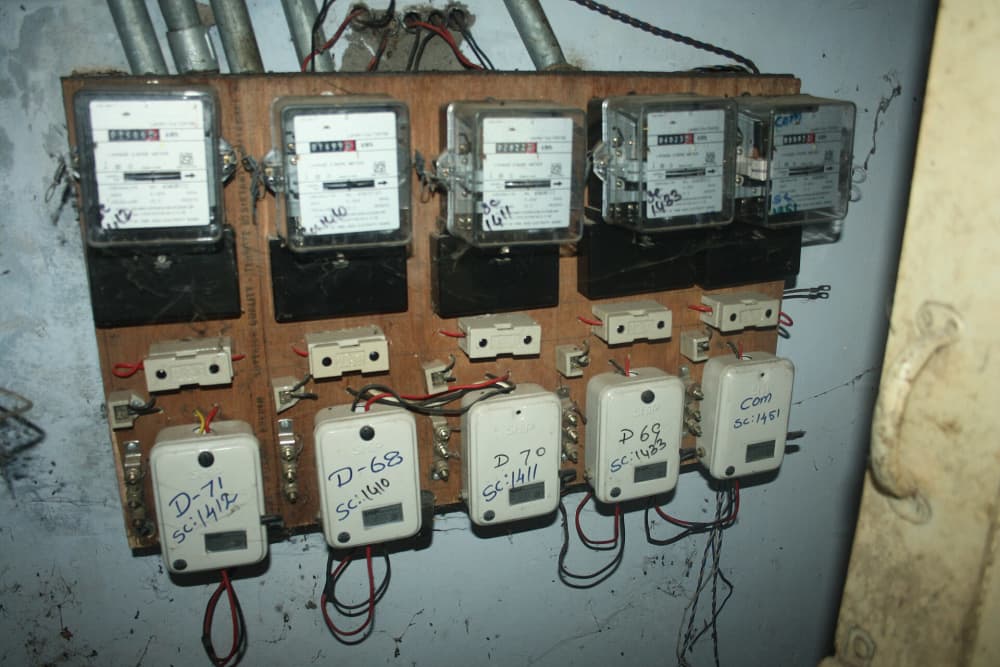
How to calculate your carbon footprint (for Indian households)
A step-by-step method for Indian households: multiply what you use (electricity units, LPG, fuel, flights, food) by a…
Carbon and Climate Glossary: Key Terms Explained Simply
An A-Z guide to 59 carbon and climate terms people and companies meet, from additionality and BRSR to CBAM, CCTS,…
Want to understand this for your home or company?
Talk to us. We are happy to explain what this means for you in plain words. We do not sell carbon credits and we cannot promise any result, but we can help you think it through.
Talk to usShare this article